


IgAN explained

CURRENT TREATMENT
The KDIGO guidelines outline the current therapeutic targets for patients with IgA nephropathy (IgAN), but the majority of patients do not reach those targets1
In IgAN, the KDIGO guidelines define proteinuria targets:1
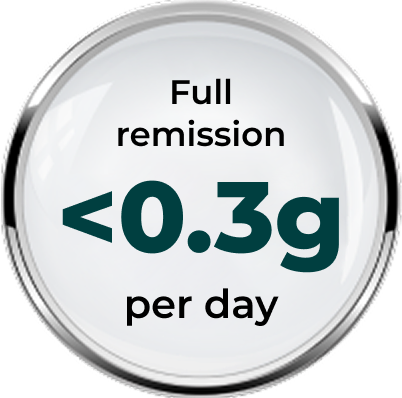
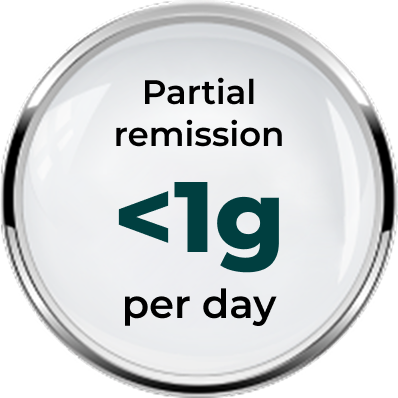
The guideline recommends initial treatment with long-term renin-angiotensin-aldosterone (RAA) system inhibition, angiotensin converting enzyme inhibitor (ACEi) or angiotensin II-receptor blocker (ARB). If the initial treatment is unsuccessful and the patient remains at a high risk of progression, treatment with glucocorticoids may be considered.1
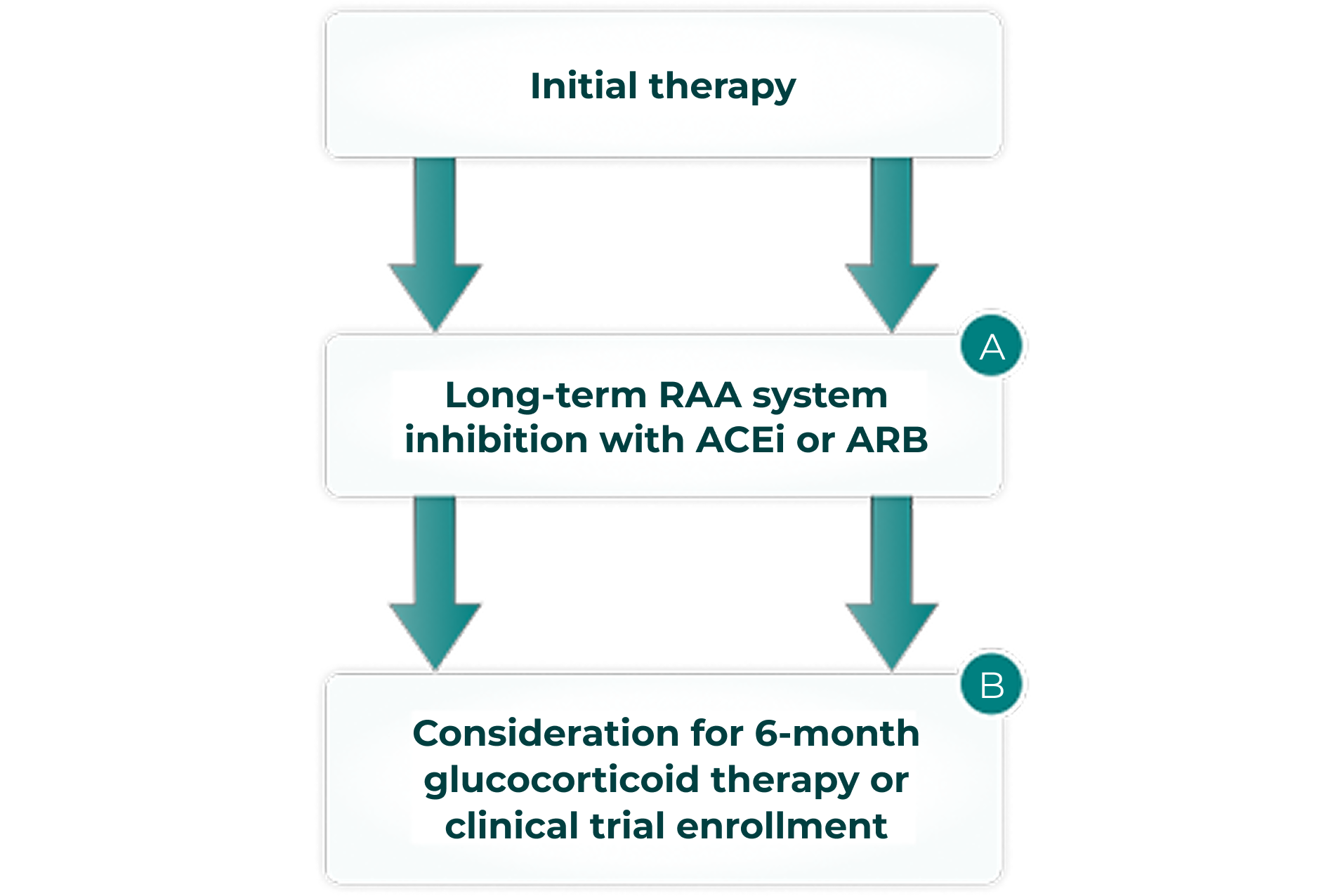
A: Long-term RAA system inhibition with ACEi or ARB

However, more than half of patients remain above target proteinuria level of >0.75–1g/d and are at high risk of disease progression1–4
B: Consideration for 6 month glucocorticoid therapy or clinical trial enrollment
Immunosuppressive drugs should be considered only in patients with IgAN who remain at high risk of progression despite maximal supportive care. In patients where immunosuppression is being considered, a detailed discussion of the risks and benefits of each drug should be undertaken with the patient recognizing that adverse treatment effects are more likely in patients with a reduced eGFR1



63% of patients (N=96) DO NOT reach the KDIGO recommended target with treatment4*
There is a high clinical unmet need for disease course modifying treatments that preserve kidney function for patients with IgAN5–8
In glomerular disease, target proteinuria and aim for remission
References & footnotes

Footnotes
*In 96 patients with IgAN receiving supportive therapy with ACEi/ARBs, 35 (36.5%) achieved either PR or CR at 3 months. CR is defined as proteinuria <0.5g/day, PR was defined as proteinuria <1g/day with at least a 50% decline from baseline4
Abbreviations
ACEi, angiotensin converting enzyme inhibitor; ACE, angiotensin converting enzyme; ARB, angiotensin II-receptor blocker; CR, complete response; eGFR, estimated glomerular filtration rate; IgA, immunoglobulin A; IgAN, IgA nephropathy; KDIGO, Kidney Disease: Improving Global Outcomes; PR, partial response; RAA, renin-angiotensin-aldosterone.
References
- Kidney Disease: Improving Global Outcomes (KDIGO) Glomerular Diseases Work Group. KDIGO 2021 Clinical Practice Guideline for the Management of Glomerular Diseases. Kidney Int. 2021; 100:S1−S276.
- Coppo R, et al. IgACE: A Placebo-Controlled, Randomized Trial of Angiotensin-Converting Enzyme Inhibitors in Children and Young People with IgA Nephropathy and Moderate Proteinuria. J Am Soc Nephrol. 2007; 18:1880–8.
- Woo KT, et al. ACEI/ATRA therapy decreases proteinuria by improving glomerular permselectivity in IgA nephritis. Kidney Int. 2000; 58:2485–91.
- Bagchi S, et al. Supportive Managment of IgA Nephropathy With Renin-Angiotensin Blockade, the AIIMS Primary IgA Nephropathy Cohort (APPROACH) Study. Kidney Int Rep. 2021;6(6):1661-8.
- Lv J, et al. Effect of Oral Methylprednisolone on Clinical Outcomes in Patients With IgA Nephropathy. JAMA. 2017; 318:432–42.
- Lv J, et al. Effect of Oral Methylprednisolone on Decline in Kidney Function or Kidney Failure in Patients With IgA Nephropathy. JAMA. 2022; 327:1888–98.
- Wheeler D, et al. A pre-specified analysis of the DAPA-CKD trial demonstrates the effects of dapagliflozin on major adverse kidney events in patients with IgA nephropathy. Kidney Int. 2021; 100:215–24.
- The EMPA-KIDNEY Collaborative Group. Design, recruitment and baseline characteristics of the EMPA-KIDNEY trial. Nephrol Dial Transplant. 2022; 37: 1317–29.
HQ-SPT-2500015 | Date of preparation: February 2025