


Women's Health
Diagnosis
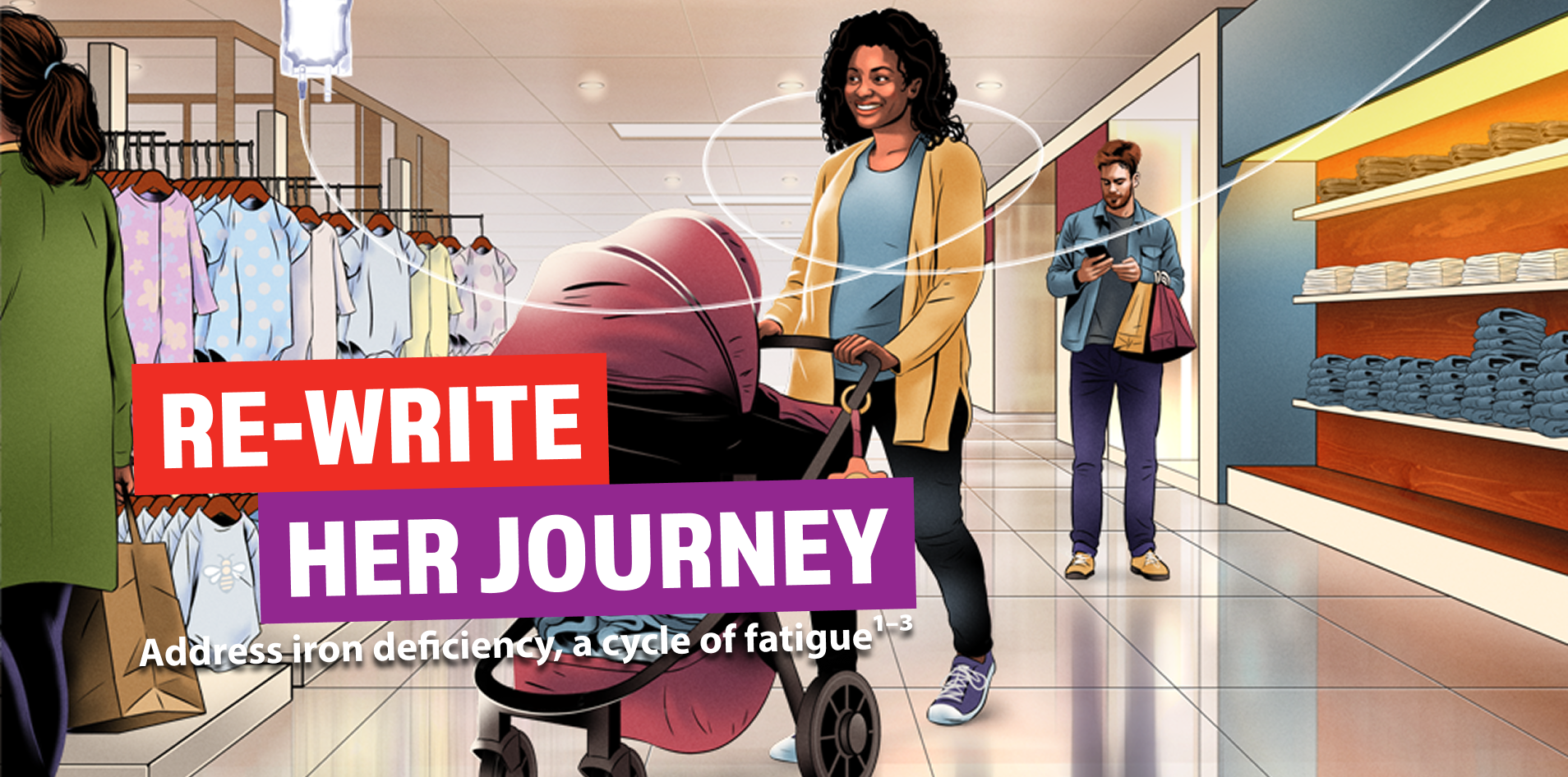
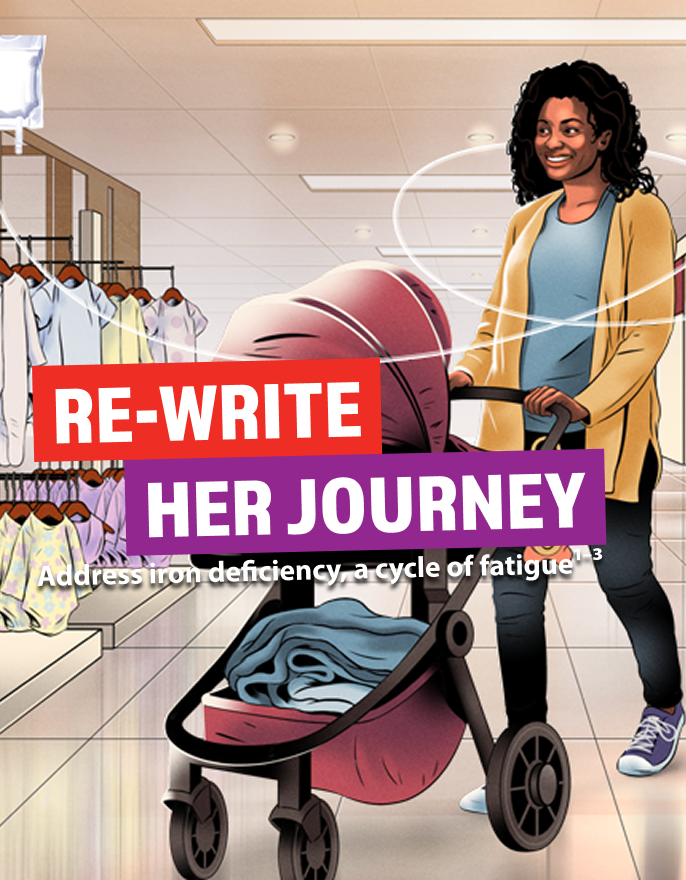
Iron deficiency is often hiding in plain sight and can be easy to overlook1,4
Iron deficiency (ID)/iron deficiency anaemia (IDA) can have a broad range of symptoms, with fatigue being the most common.1
Consider ID/IDA in your female patients with unexplained fatigue, particularly if they:1,4–7

Have abnormal uterine bleeding, e.g. heavy menstrual bleeding (HMB) or endometriosis
Are pregnant or postpartum

Follow a vegan or vegetarian diet
Detect ID early before progression to anaemia4,8


Diagnostic tests for ID
- Serum ferritin is the most accurate indicator of ID in the absence of inflammation9
- In adults, including pregnant women, ID is defined as serum ferritin level <30 µg/L 9,10
- In the context of comorbidities, such as inflammation, serum ferritin <100 μg/L or higher may be used, in combination with TSAT <20%9,11

Diagnostic tests for IDA
- The presence of anaemia is confirmed by Hb concentration9
- In non-pregnant women, anaemia is defined as Hb <12 g/dL9
- During pregnancy, it can be defined as Hb <11 g/dL in the first and third trimesters and Hb <10.5 g/dL in the second trimester10
- In the postpartum period, anaemia is confirmed by Hb <12 g/dL (<10 g/dL is clinically significant anaemia)7,10
Timely identification is critical4,8 – if you suspect ID/IDA, assess Hb and ferritin to get the full picture9
References & footnotes

Abbreviations
Hb, haemoglobin; HMB, heavy menstrual bleeding; ID, iron deficiency; IDA, iron deficiency anaemia; TSAT, transferrin saturation.
References
- Dugan C et al. The misogyny of iron deficiency. Anaesthesia 2021;76(Suppl 4):56–62.
- Favrat B et al. Evaluation of a single dose of ferric carboxymaltose in fatigued, iron-deficient women – PREFER a randomized, placebo-controlled study. PLoS One 2014;9(4):e94217.
- Van Wyck DB et al. Large-dose intravenous ferric carboxymaltose injection for iron deficiency anemia in heavy uterine bleeding: a randomized, controlled trial. Transfusion 2009;49(12):2719–28.
- Pavord S. Iron deficiency in women – the silent debilitator. Available at: https://www.rcpath.org/static/dd4dafe5-d429-4259-bc2d45e67b456467/Iron-deficiency-in-women-the-silent-debilitator.pdf (Accessed August 2025).
- Gete DG et al. Risk of iron deficiency in women with endometriosis: a population-based prospective cohort study. Women’s Health Issues 2024;34(3):317–24.
- Pawlak R et al. Iron status of vegetarian adults: a review of literature. Am J Lifestyle Med 2016;12(6):486–98.
- Breymann C et al. Diagnosis and treatment of iron‑deficiency anaemia in pregnancy and postpartum. Arch Gynecol Obstet 2017;296(6):1229–34.
- International Federation of Gynecology and Obstetrics. FIGO Statement: Iron deficiency and anaemia in women and girls. 2023. Available at: https://www.figo.org/resources/figo-statements/iron-deficiency-and-anaemia-women-and-girls (Accessed August 2025).
- Iolascon A et al. Recommendations for diagnosis, treatment, and prevention of iron deficiency and iron deficiency anemia. Hemasphere 2024;8(7):e108.
- Pavord S et al. UK guidelines on the management of iron deficiency in pregnancy. Br J Haematol 2020;188(6):819–30.
- Benson CS et al. The effect of iron deficiency and anaemia on women’s health. Anaesthesia 2021;76(Suppl 4):84–95.
A complete copy of the cited publications may be requested from CSL in your country.